
Role
UX/UI Designer - Collaborated with designers, product managers, engineers, and data analysts
Tasks
User research, User Flows, Prototyping, Interface Design, Interaction Design
Duration
2022-2024
Overview
“Why do I always pick the signal that makes me lose money?”
— That’s what I kept hearing from SoFinX ( copy trading platform ) users.
After the MVP I designed went live, losses spiked and user trust dropped. This case study walks through how I developed strategy mode to solve this problem.
Highlights
An end-to-end customizable copy-trade experience
for better control and lower risk

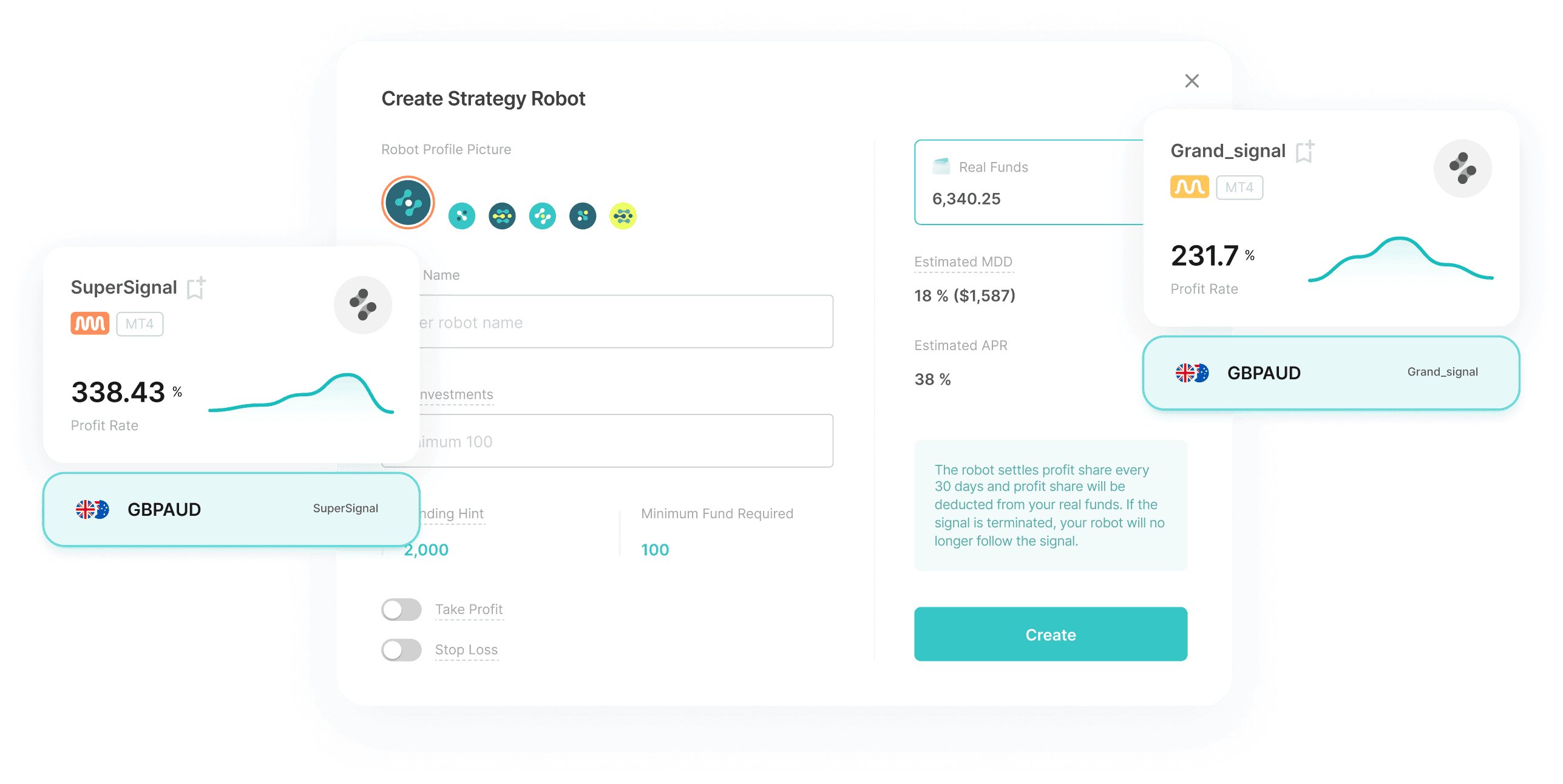
Create Strategy Robot.
VIDEO
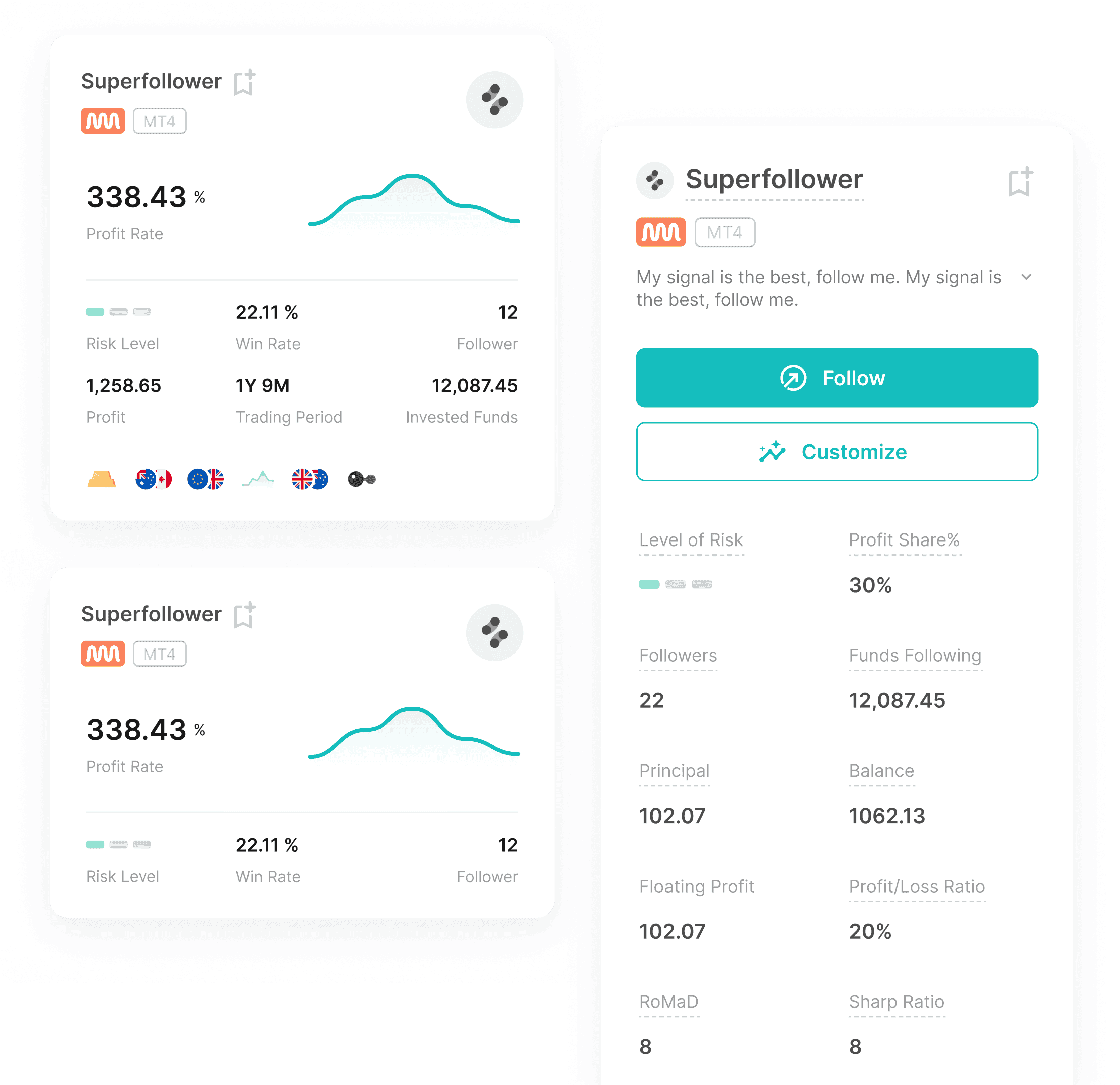
Signal Card/Info.
IMAGE
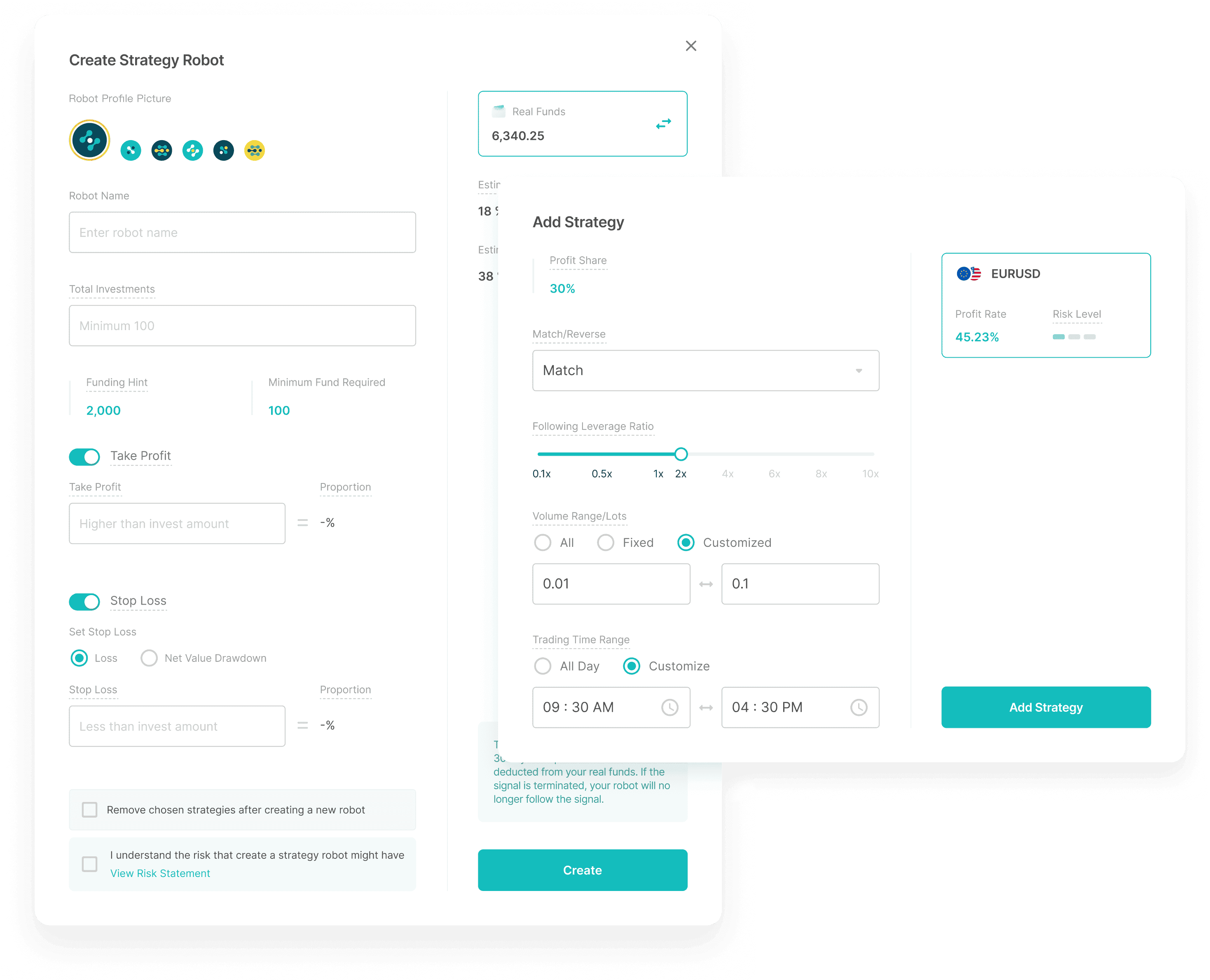
Add Strategy/Create Strategy Robot Interface.
IMAGE
Are copy-trading newbies doomed to fail?
Beginners often quit or act recklessly.
1 month after SoFinX MVP launch, I asked for data team for a validation. These numbers pushed me to rethink, Was this really a user flow issue, or a deeper UX flaw ?

Was bad UX the biggest factor behind the losses?
Losses are part of investing, to make sure the answer of this question, I broke the issue down into possible causes:
Market volatility
Sudden price swings beyond investor control.
Signals failure
Choices driven by emotion or poor risk control.
Investor’s own act
Delayed or inaccurate signals affecting trades.
UX flaws
Design issues that mislead or cause missteps.
Initial Challenge
Help beginners complete a copy-trade flow smoothly—reduce friction and frustration.
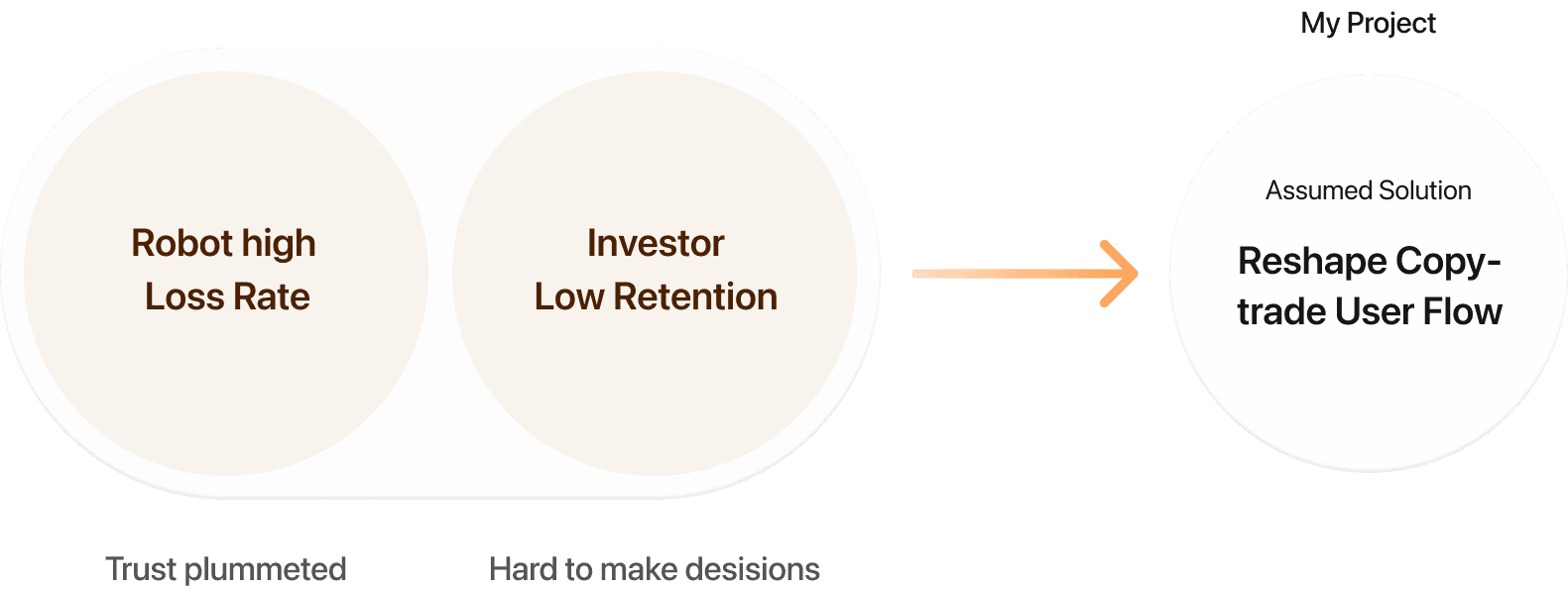
I assumed it’s about the clunky user flow. But after I conducted user interviews and analyzing data, I realized its much more than a UX friction.
Reduce loss, Boost adoption.
Based on user research and data validation, I aimed to achieve two key goals through the Strategy-Following Mode:
Reduce the investors loss rate
below 50%
Current metric: 83%
Boost the first-time robot creation rate
to 80%
Current metric: 60%
Investors: “Hard to choose a signal worth copying”
The answers I was eager to learn.
To understand why investors were losing money, I conducted 20 user interviews and focused on several key questions:
How do you choose a signal provider? What do you look for?
Understand decision-making and criteria
Were there any confusing steps in Creating your trading robot?
Identify flow issues and cognitive gaps
How’s your robot performing? Is it meeting expectations?
Understand expectations and results
User Interview /
Key Findings
The MVP forced users into blind acceptance.
From these feedback, I mapped it onto user journey to see where expectations broke down. This revealed how confusion made users into blind acceptance.
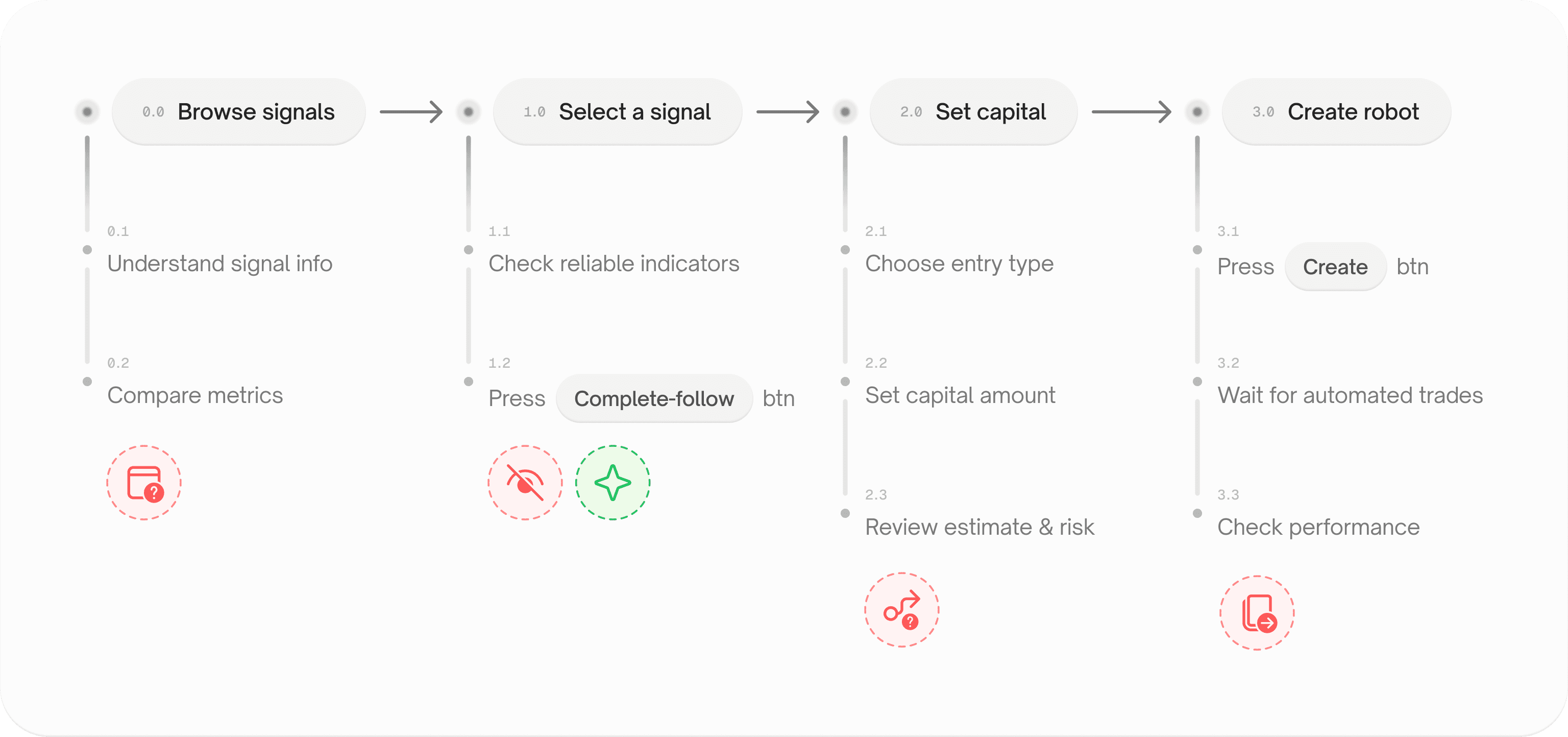
I distilled the interviews into 4 recurring themes of feedback:
Signal card indicators are unclear
No explanation, so users ignored them
Believing high returns = guaranteed profit
This led to unexpected liquidations
Unclear what happens after following
Lack of confidence led to drop-off
Complete followed signal’s risk
Copying all signals' trades is hard to manage risk
User Interview /
Extended Insights
Investors may want a particular strategy.
The Beginning of Strategy Mode.
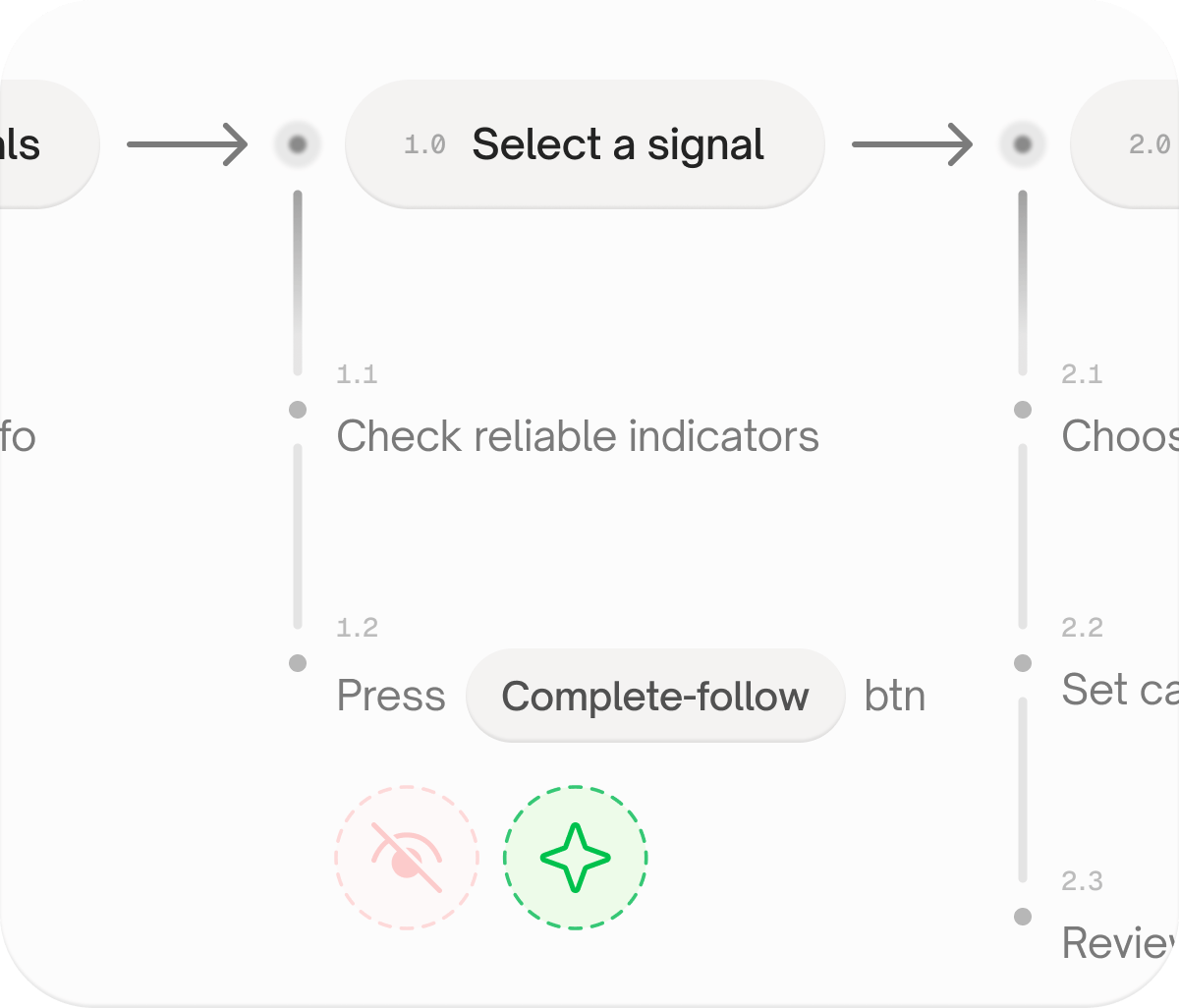
- Signal selection revealed diverse investor intentions.

“Can I just follow their gold trades?”
“Gold’s been volatile. I’m not confident trading it, can I follow someone good at it?”
These feedback above revealed that investors had their own trading interests. Our MVP didn’t offer a customizable experience, which became the spark for Strategy Follow Mode.
Most investors fails to make reasonable decisions by misleading signals.
With the data team’s help, I dug into the numbers:
Finding 1 – Why are investors losing money?
Robot PnL Distribution
93% of robots lost money — and surprisingly, 70% of those losses came from the platform’s top ROI signal.
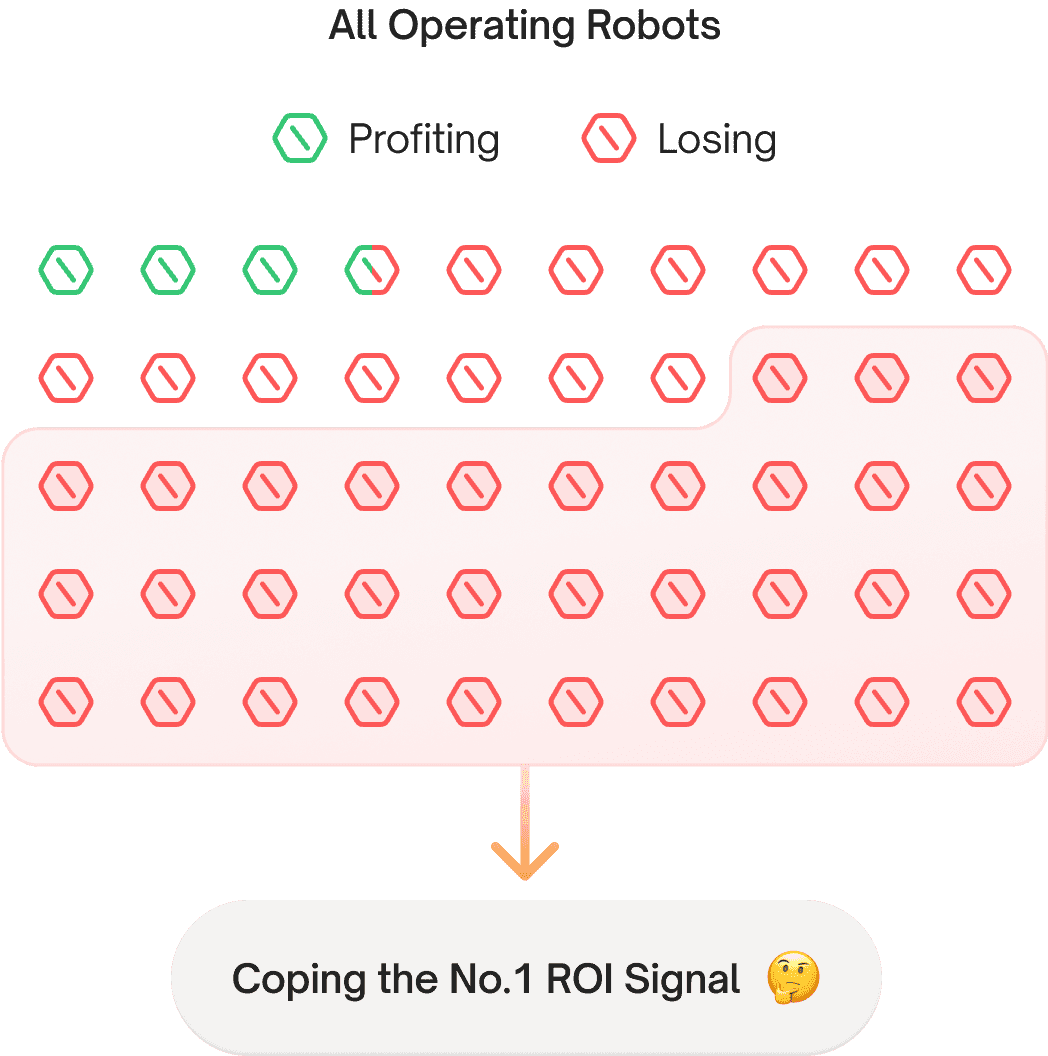
Conclusion 1
This raises a red flag: the platform’s top signal may not be as reliable as it seems.
The Hidden Risk Behind the Top ROI Signal
Lifetime ROI looks solid, but zooming into just 7 days uncovers a consistent drawdown.
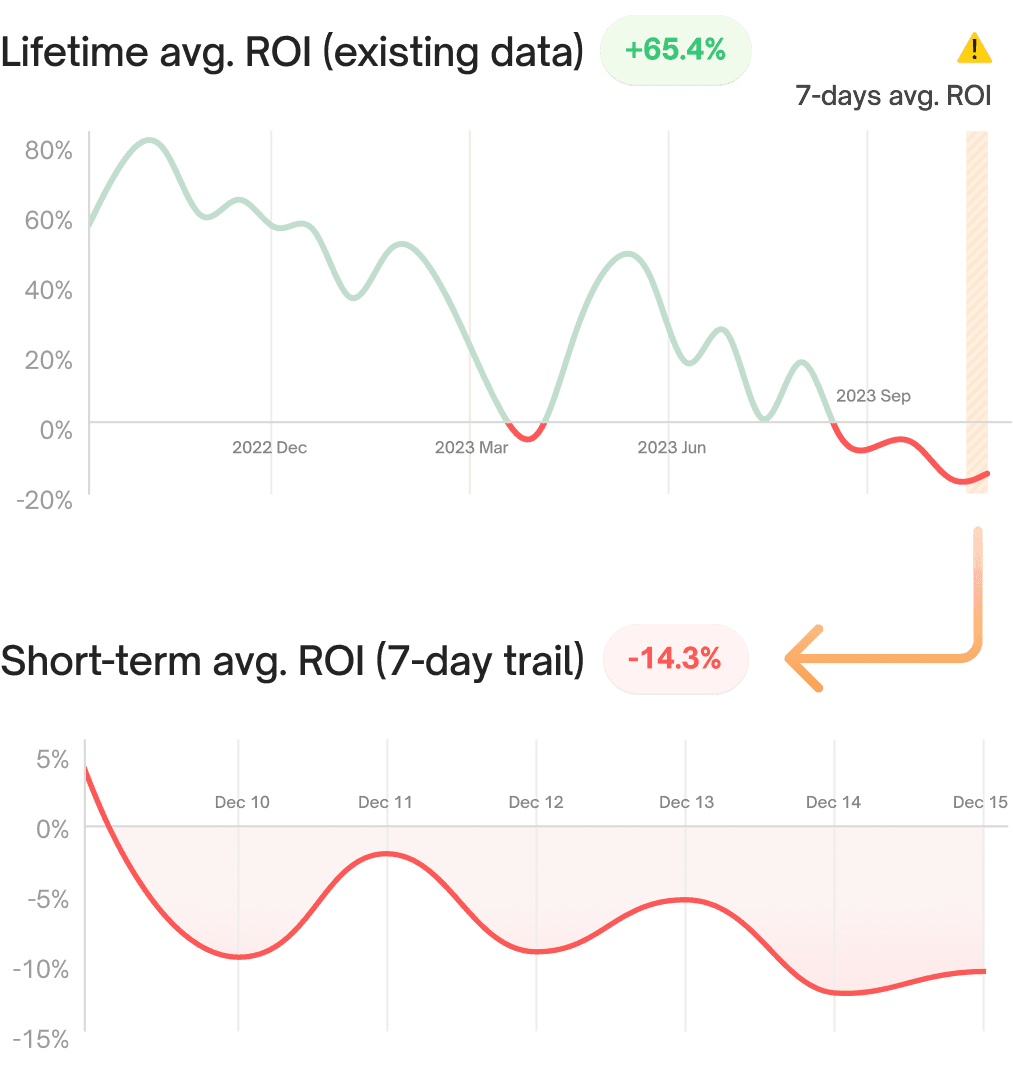
Conclusion 2
Long-term returns mask short-term risks—making retail investors with smaller capital especially vulnerable.
Finding 2 – Narrowing focus shows how strategy can reduce losses.
Complete Copying (Default Mode)
Default mode copies every trade under a signal—every symbol, every PnL—resulting in heavy losses for most robots.
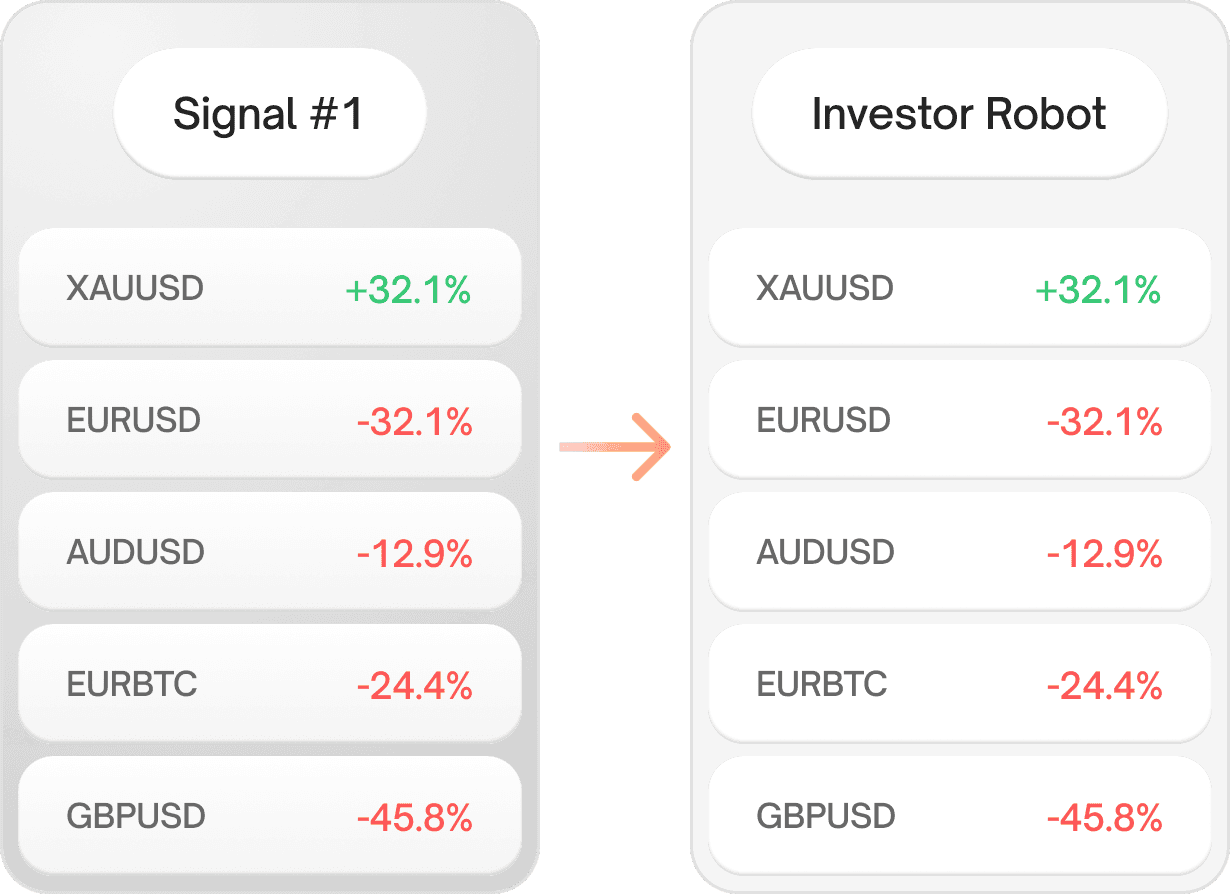
Conclusion 1
Blindly following all trades leaves users highly exposed.
Focused Symbol (Strategy Mode)
If users only followed the top-performing symbol of each signal in the past 7 days, 90% of robots would’ve turned profitable.
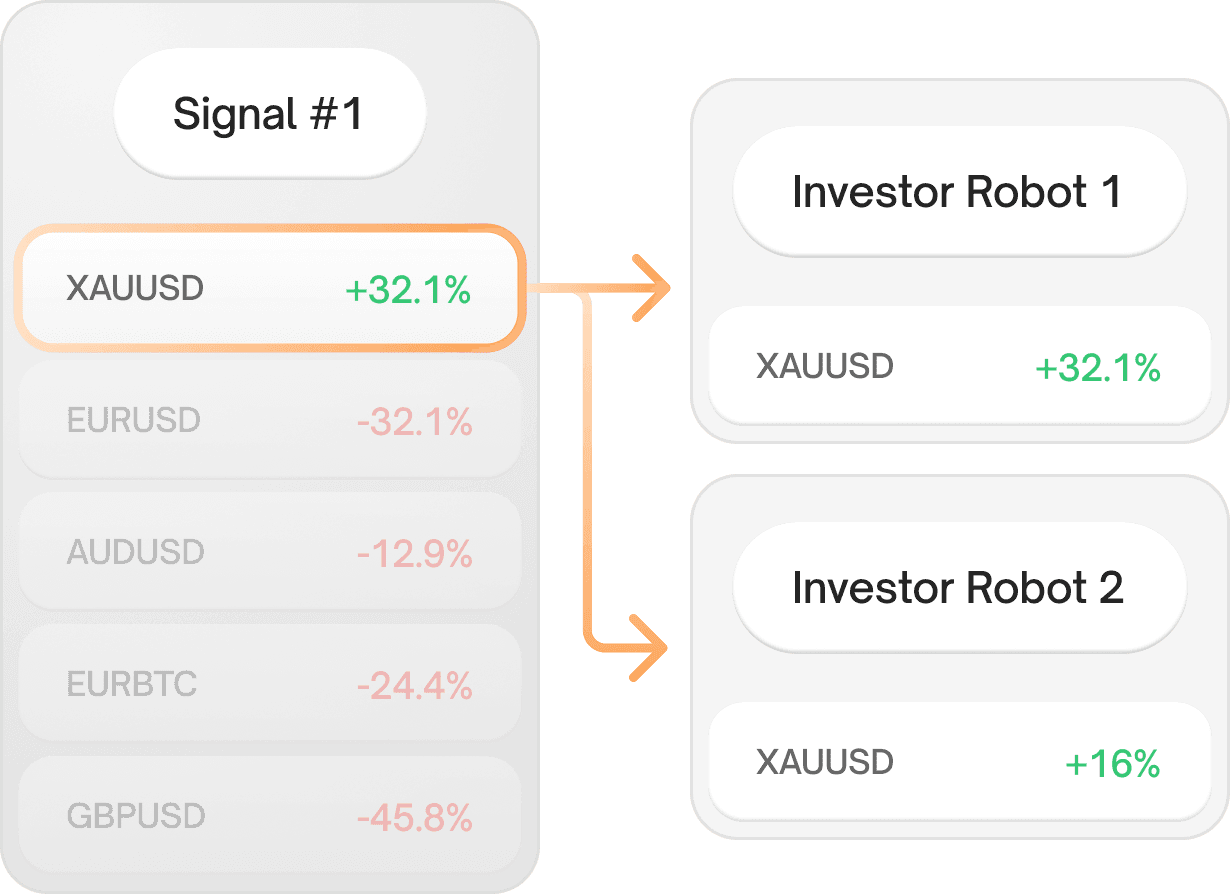
Conclusion 2
This reveals two key factors:
Performance must be based on recent data.
Following a single symbol reduces blow-up risk.
Investors can’t customize strategies on existing platforms.
Does other platform share this vision?
Before designing, I reviewed three major copy-trading platforms (Gate.io, FollowMe, eToro), analyzing their limitations:
Criteria

Gate.io

FollowMe

eToro
Copy Mode
Full copy or single-symbol copy
No strategic combinations
Subscription-based full copy
Requires external accounts
No internal trading
Full copy per signal
No asset or strategy control
Strategy Flexibility
Basic flexibility (single symbol only)
Limited within signals
No flexibility (all subscriptions automated)
Signal-only copy
No symbol-level control
Performance Indicators
Clear indicators
Only recent 30 days
Scattered data
Third-party lookup required
Clear basic indicators
No short vs. long-term toggle
Usability
X High learning curve (funding & robot setup)
Simple setup
External account connection required
Simple interface
Straightforward flow
Key insights
Most platforms are either rigid (no customization) or overly complex.
No competitor effectively solved "helping users make clear, informed decisions."
It finally clicked:
Develop a customizable strategy copy model.

Investors weren’t making bad decisions—they lacked the right structure to choose clearly.
Focused Design Challenge
So now I see it more specifically, the core design challenge is:
How might I use "Strategy-Following Mode" to boost overall profitability?
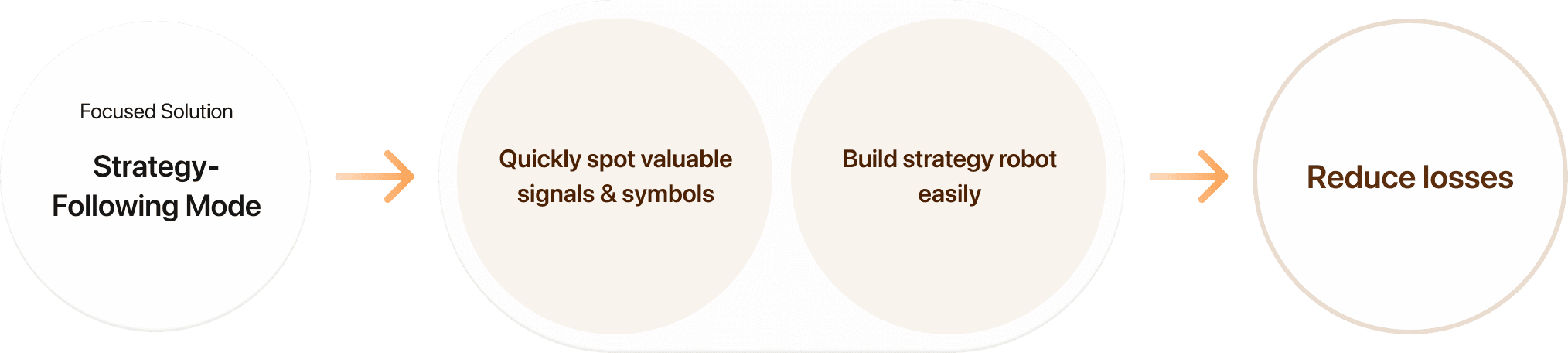
01 - Strategy Copy Mode
Strategy Copy User-flow
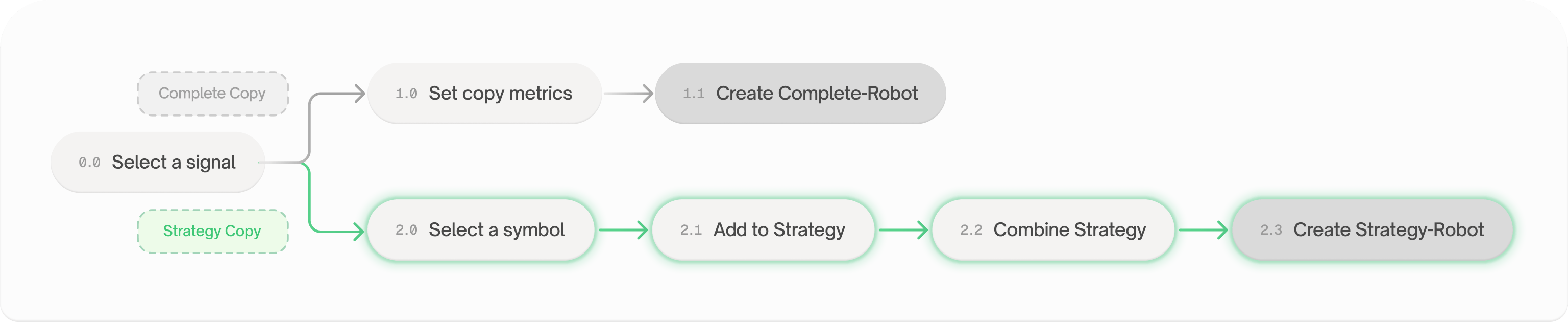
Old flow
Investors could only follow one signal source, with all actions blindly mirrored.
New flow
A new strategy-following flow — build robot with chosen symbols, conditions, and multiple signals.
Iterations
Spot a high-performing symbol and take advantage of it.
Investors can copy specific symbols, customize copy-trade parameters, and add them to their personal strategy pool—maximizing control and minimizing risk.
Before
Only complete-copy access.
(MVP/Flow-0.0)
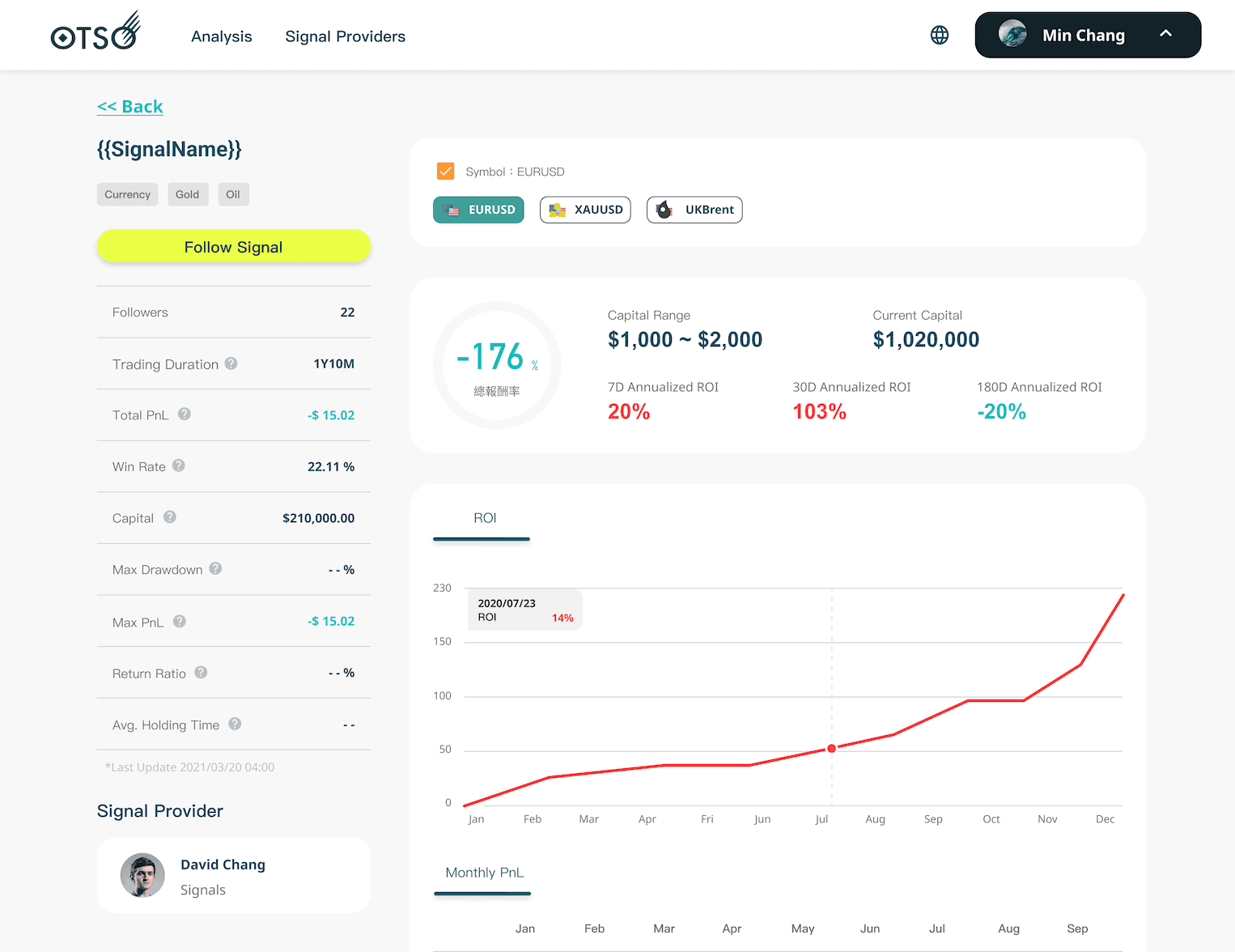
Signal detail page.
IMAGE
After
Add Strategy in a same user-flow.
(New Version/Flow-2.0)
Signal detail page - Add strategy.
VIDEO
Customizing strategies to meet investors’ needs
Turning copy-trading into a strategy you can actually control.
Direction
Reverse copying lets investors rethink strategies beyond simple mirroring.
Leverage
Adjust ratios based on provider and capital to reduce liquidation risks.
Conditions
Stay in control by setting your own trading hours and volumes.
New Version
Parameters focused on one symbol.
(Flow/2.1)
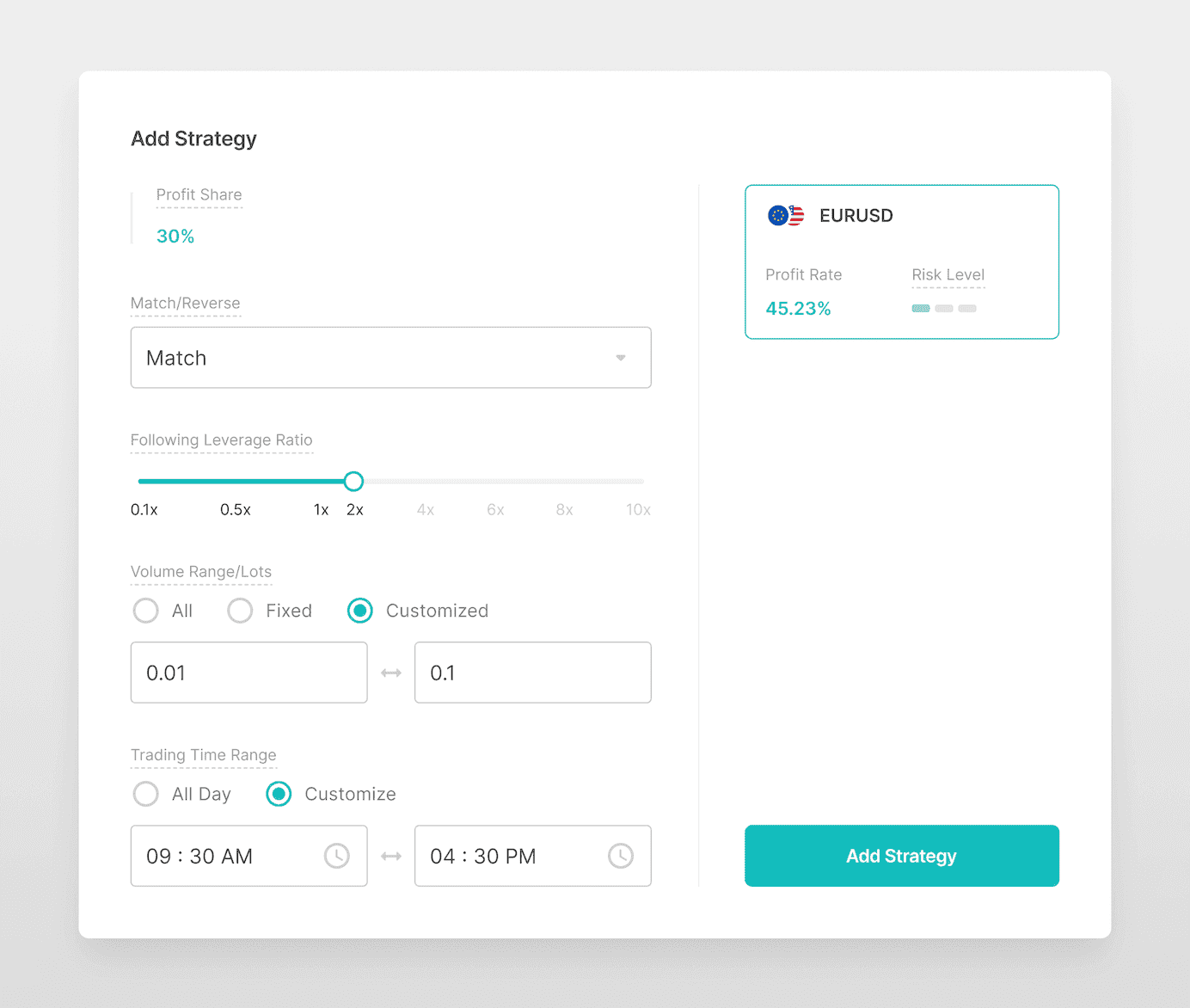
Add strategy - popup.
IMAGE
Combine cross-signal strategy, Create the unbeatable robot.
I enabled investors to combine symbols across signals and build their own robots based on their preferences.
New Version
Combine strategy to create robot.
(Flow/2.2-2.3)
Create strategy robot flow.
VIDEO
02 - Clearer Signal Info
Iterations
New sorting + filters to spot signal based on investors needs and worth coping.
Guide users toward quality signals with enhanced filters for safer, more convenient choices.
Before
Single sorting caused misleading signals.
(MVP/Flow-0.0)
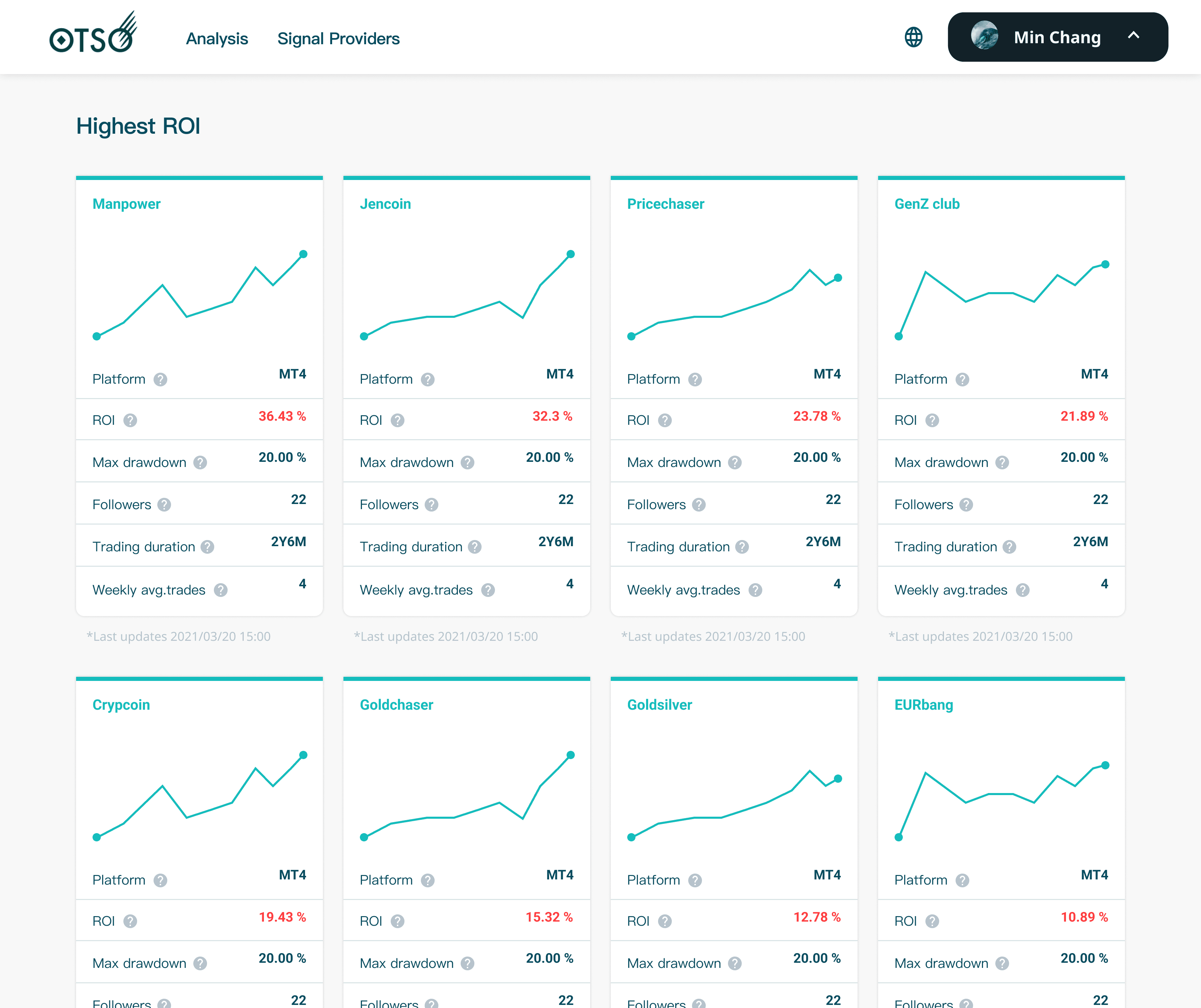
Signal list page.
IMAGE
After
Switch sorting and filtering freely.
(Flow/0.0)
Signal list page.
VIDEO
Deeper and more valuable signal indicators.
Active Rate
Use recent trading activity to spot inactive or invalid signals.
Risk Level
Measure risks by provider’s max drawdown. Scale it into High/Medium/Low.
Timeframe toggling
Compare signal results across time periods.
Before
Vague parameters and provide no reference value.
(MVP/Flow-0.0)
Signal list page.
IMAGE
After
Clearer hierarchy to spotlight high-value content
(Flow/0.0)
Signal Detail page.
VIDEO
03 - Optimized Create Robot User Flow
Keep investors confident in what happens next.
Before
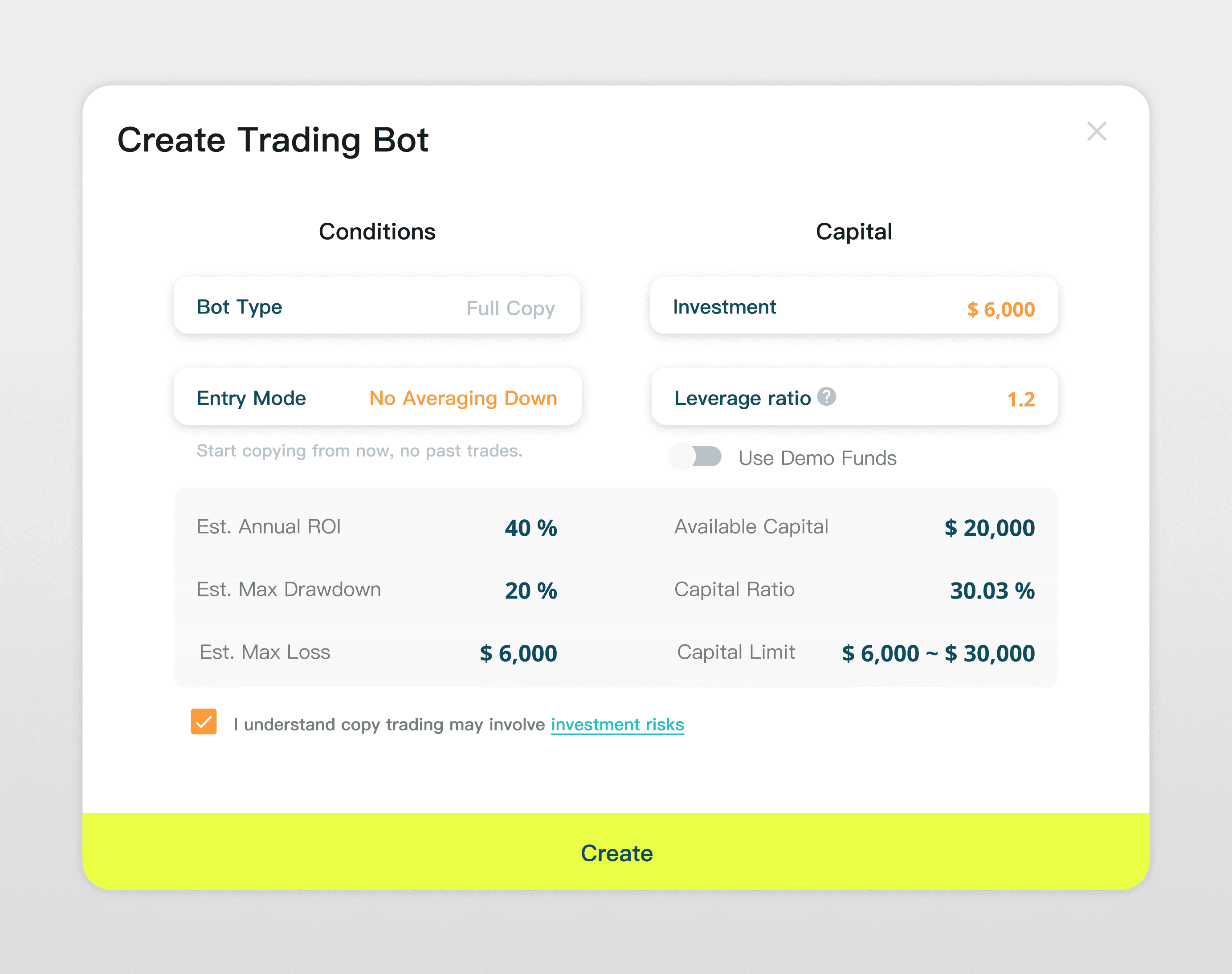
Create Robot - popup.
IMAGE
Lack of Transparency and Risk Control
1. Investors could complete follow in a few clicks but had no clarity on capital flow or leverage impact.
2. No capital warnings or stop-loss mechanisms.
(Flow/1.1)
After
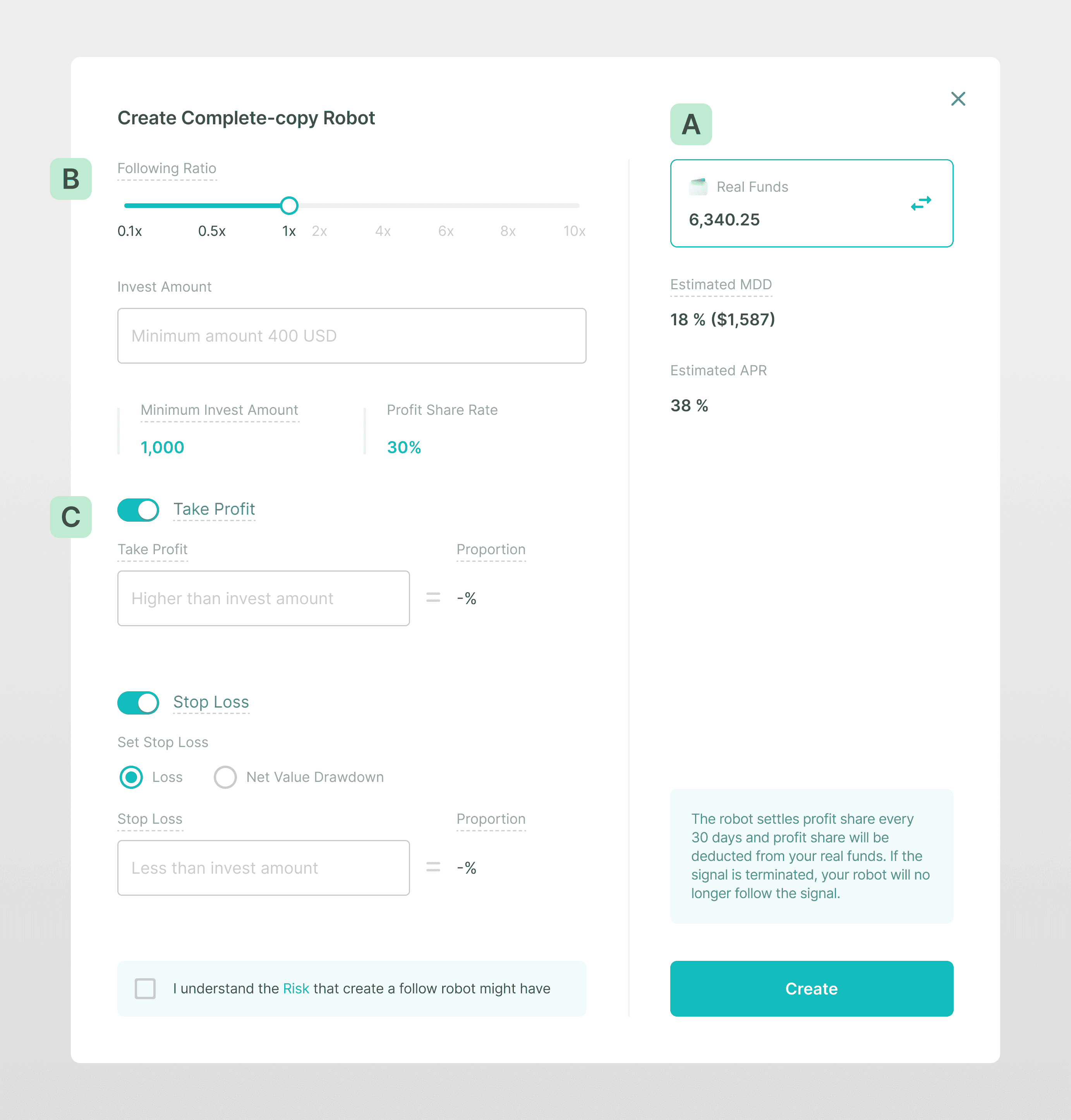
Create Complete-copy Robot - popup.
IMAGE
A
Clear capital information
Investors now clearly understand how their funds move and are used.
B
Control risk upfront: Copy Leverage + Minimum Capital
Prevent beginners from inadvertently over-leveraging.
C
Stop-loss conditions, Enhanced risk control
Offer flexibility and a clearer exit strategy.
(Flow/1.1)
Notification Center.
VIDEO
D
Push notifications, Prevent mistakes
Instant alerts on important settings reassure investors.
Measured Impact
Strategy Following proved more stable and profitable.
During a recent copy-trading competition held on the platform, I analyzed the performance of all user-created bots. The results were clear:
73%
strategy robots achieved positive returns
Average ROI 124%
56%
complete-copy robots achieved the same
Average ROI 37%
Total of : 65% robots were profiting
After Strategy Mode Went Live

Simz / 3 yrs investor
Yo, my robot finally made money. I’m shocked.

Helen / new investor
I made a profit and didn’t panic once. Who am I.

Nick / 7 yrs investor
Feels illegal that i’m able to do this setup.
Me

Team Impact
Foundations Formed Along the Way
Beyond product outcomes, my work also brought long-term value to the team’s design and development process:

Initiated internal Design Reviews
I implemented a team-wide design review ritual to help align feedback early, reduce last-minute churn, and give iteration decisions more breathing room and clarity.
Built a flexible Design System
I established a reusable, adaptable design system that significantly sped up front-end development—especially valuable during rapid iterations and shifting requirements.
Strategy worked. But…adoption didn’t.
Even though strategy bots outperformed, they were used in only ⚠️ 37% of cases.
So I asked: What’s stopping users from choosing what works?
Here’s what I did next to improve adoption:
Used usability testing to identify blockers
Observed where users missed, misunderstood, or gave up on the strategy feature.
Reworked the app to spotlight strategy
Improved placement and guidance so users could see, trust, and adopt it.